
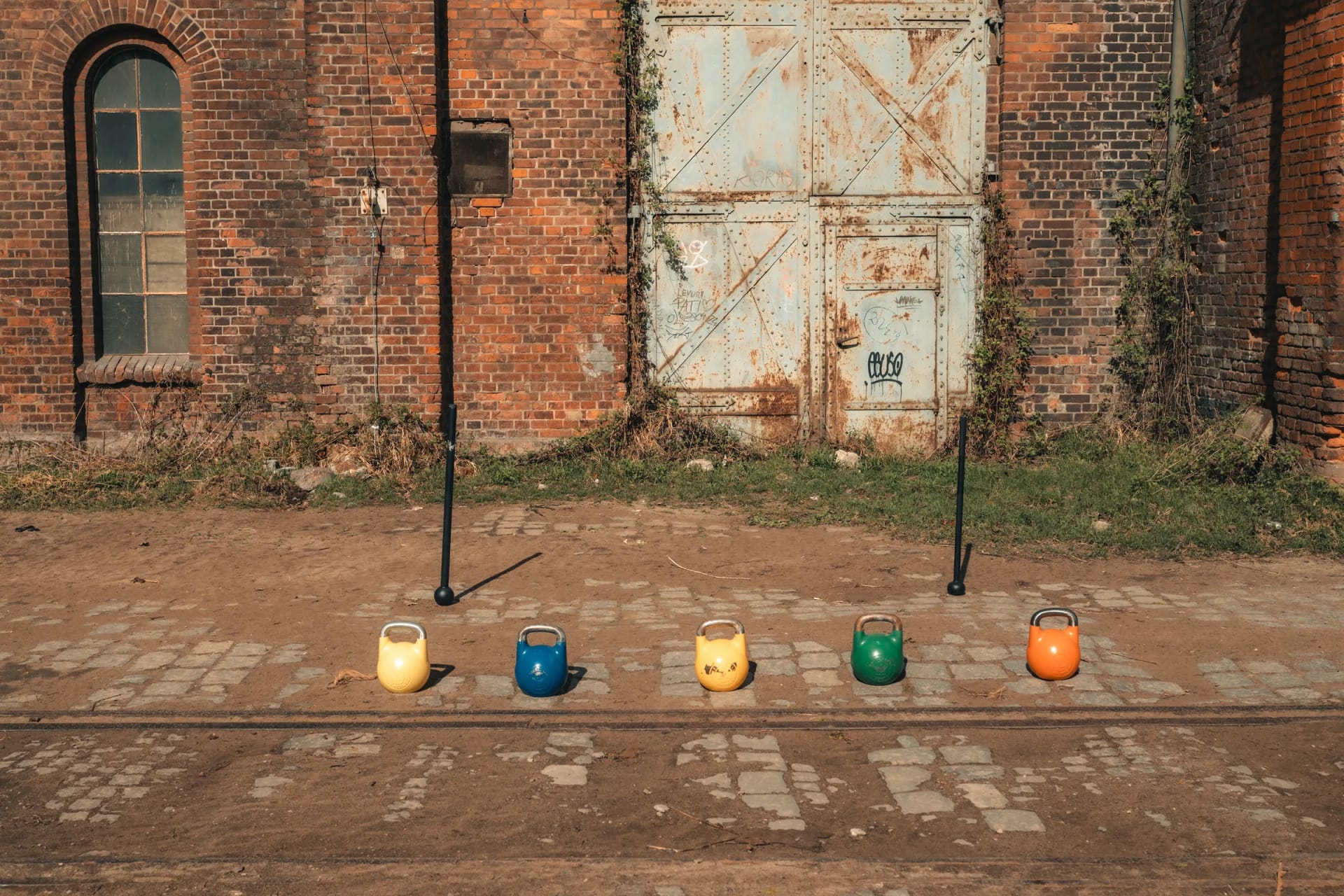
Buying a kettlebell looks like a single decision but is really three: which type, which weight, and how you will progress from there. Get the type right and the bell suits your training; get the weight right and you actually use it; plan the progression and you avoid the classic mistake of a lonely bell that is either too light to challenge you or too heavy to train with.
1. Type: competition or hardstyle
This is the decision that follows your goal, not your budget. A competition (steel) bell keeps the exact same shape at every weight, so technique carries over cleanly as you load up — the right call for kettlebell sport or anyone who values a consistent feel. A hardstyle (cast-iron) bell grows with its weight and offers better value, ideal for swings, get-ups, presses and general strength.
- Train for reps, ranks or timed sets → competition kettlebell.
- Train for strength, conditioning or value → hardstyle kettlebell.
- Want the same feel from your light bell to your heavy bell → competition.
2. Weight: pick for form, not ego
The single most common mistake is going too heavy. A kettlebell is a skill tool first — you learn the hinge, the rack and the overhead lockout before you chase load. Choose a weight you can move with clean technique for a full working set. Two-hand swings tolerate the most weight; presses and snatches noticeably less, so a bell that is perfect for swings may be too heavy for pressing.
3. Progression: jump, don't micro-load
Kettlebell training progresses in jumps, not in 1.25 kg plates. Because standard steps are 4 kg, you build capacity at one weight until reps and quality are solid, then move to the next bell. A practical home set is two or three bells spaced 4–8 kg apart, which lets you press the lighter one, swing the heavier one, and scale any exercise up or down without gaps.
Still unsure between two weights? Buy the lighter one. You will train it more often, learn faster, and it will always have a place in your warm-ups and high-rep work even after you add a heavier bell.