
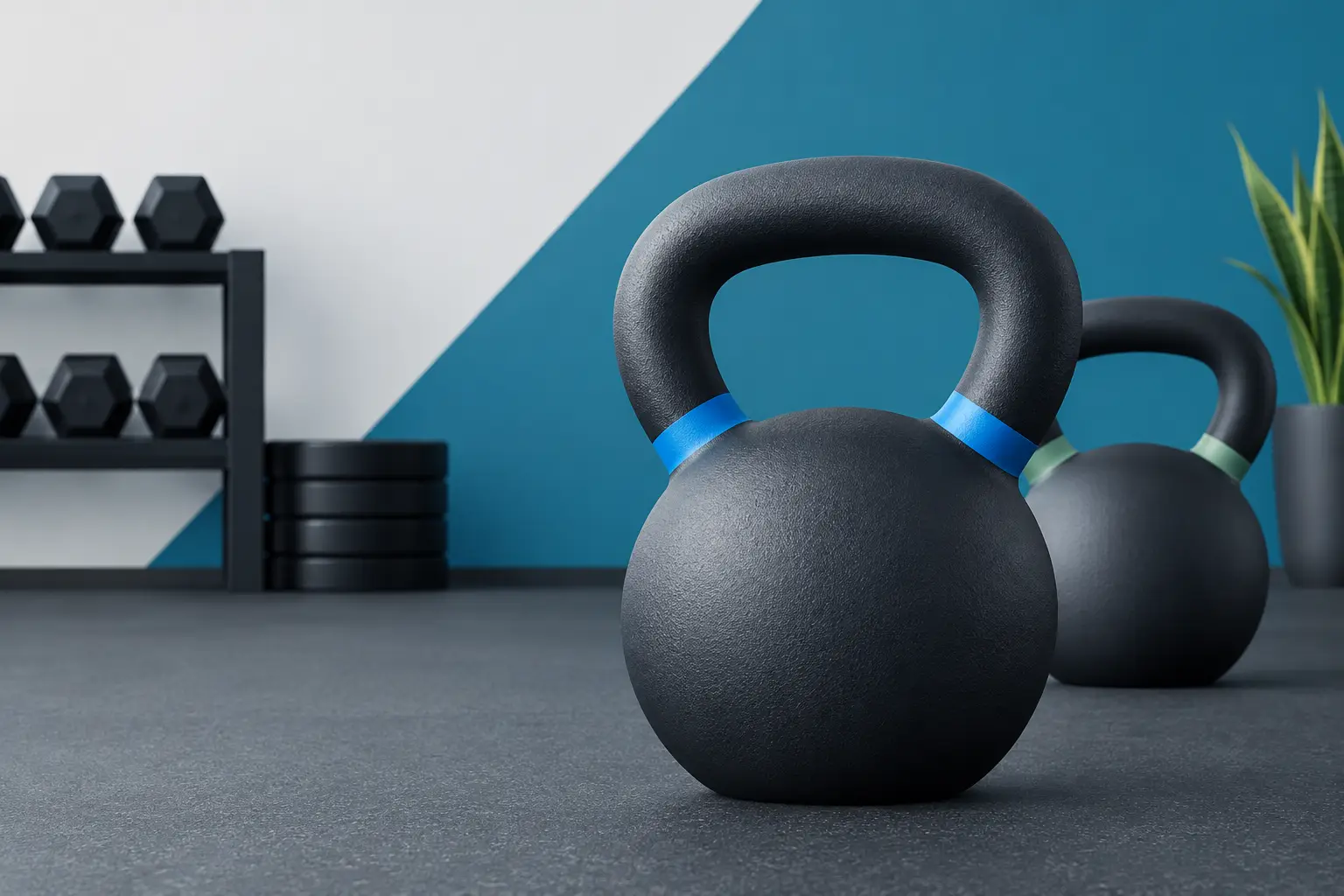
A kettlebell finish changes more than how the bell looks on the rack. It affects your grip when sweat builds, how the handle feels during high-rep work, and how well the tool stands up to years of drops, cleans, presses, and swings. This powder coat kettlebell review focuses on what matters under load: grip, durability, handle feel, maintenance, and the type of training a powder-coated cast-iron bell serves best.
A good kettlebell should disappear into the session. You should be thinking about your hinge, rack position, breathing, and power output - not fighting a slippery handle or worrying about chipped paint. Powder coating is one of the most practical finishes for hardstyle kettlebells because it supports exactly that kind of repeated, straightforward work.
What Is a Powder-Coated Kettlebell?
A powder-coated kettlebell starts as cast iron. After casting and surface preparation, dry polymer powder is applied to the bell and cured at high heat. The result is a textured, durable outer layer rather than a glossy painted surface.
That texture is the point. It gives the handle more friction than smooth enamel, vinyl, or highly polished finishes. For many lifters, this creates a secure connection without making the handle feel overly abrasive. The coating generally covers the full bell, including the handle, although the exact texture can vary by manufacturer.
Powder-coated kettlebells are most commonly used for hardstyle training: swings, deadlifts, cleans, presses, squats, rows, carries, snatches, and Turkish get-ups. They are built for hard use, not display.
Powder Coat Kettlebell Review: The Grip Test
Grip is where this finish earns its reputation. A quality powder coat provides a dry, lightly textured feel that becomes more useful as your hands warm up. It is not sticky. It does not glue the bell to your palm. Instead, it offers controlled friction that helps you keep the handle positioned correctly through ballistic and grind movements.
For two-hand swings, the benefit is immediate. The handle feels planted without requiring a death grip. That matters because excessive squeezing can fatigue the forearms early and interfere with a relaxed, powerful hinge.
For cleans and snatches, the verdict is more individual. Some experienced lifters prefer bare or smoother steel handles for very high-volume sport-style snatching, where the bell needs to rotate freely in the hand. A powder-coated handle has more traction, which can feel secure but may create more friction if your technique is inefficient or your hands are soft.
That does not make powder coat a bad snatch finish. It means your hand insertion, timing, and grip relaxation need to be honest. If the bell is grinding across your palm, the first fix is usually technique, not a different coating. Chalk can help manage moisture, but use it lightly. Too much chalk on a textured handle can create a dry, rough feel that accelerates skin wear.
Durability Under Real Training Conditions
Powder coating is tough, but it is not indestructible. Repeatedly dropping a kettlebell onto concrete, dragging it across rough surfaces, or storing it in a damp outdoor area will eventually mark any finish. The real standard is whether normal training causes the coating to fail early. On a well-made bell, it should not.
A quality powder coat resists scuffs, moisture, and everyday abrasion far better than a thin painted finish. Small chips are cosmetic at first. Cast iron can rust where bare metal is exposed, so touch up deep chips or keep the area dry if you train in a humid garage or basement.
The finish also protects the user experience over time. A bell with peeling paint, sharp casting seams, or corrosion around the handle is not just unattractive. It can compromise grip and make high-rep work unnecessarily unpleasant. Durable equipment supports consistent training. That is the job.
The floor still matters. Powder coating protects the kettlebell more than it protects your surface. Use rubber flooring, lifting mats, or a suitable training platform if you train indoors. This protects the bell, reduces noise, and prevents unnecessary damage to concrete, tile, or wood.
Handle Feel Matters More Than Marketing
Do not judge a kettlebell by finish alone. The handle geometry and casting quality determine whether the bell feels right in use.
A good powder-coated handle should have a consistent texture and no sharp ridges where the handle joins the body. The window should give your hand room to settle into a stable rack without compressing your fingers. Handle thickness also changes the experience. A thicker handle can build grip strength and feel solid for swings and carries, while a more moderate diameter may be easier for smaller hands or longer clean-and-press sets.
Cast quality matters just as much. Look for a one-piece cast-iron construction, a clean underside of the handle, a flat base, and no obvious voids or rough seams. A durable coating cannot hide poor geometry. If the bell is uncomfortable when racked or its handle tears up your hands after a few sets, the problem is not solved by adding more chalk.
This is where hardstyle cast-iron kettlebells and competition kettlebells serve different needs. A powder-coated hardstyle bell is an excellent general-strength tool. A competition bell uses standardized external dimensions across weights and is often better suited to athletes who want consistent rack and overhead positions as loads change. Neither is automatically superior. Match the tool to the work.
Where Powder-Coated Bells Perform Best
Powder-coated kettlebells are at home in strength and conditioning sessions that combine explosive work with loaded fundamentals. They work especially well for swings, goblet squats, deadlifts, cleans, presses, front-rack carries, suitcase carries, and get-ups.
They also make sense for home gyms and coaching spaces. Their durability is valuable when equipment is used by multiple people, moved often, or trained with several times each week. The textured finish gives beginners a more confident first experience than a slick, glossy bell, while experienced lifters can still load serious strength sessions with them.
For outdoor training, powder coat is a practical choice, provided you do not leave the bell exposed to rain and constant moisture. Wipe it down after wet sessions. Store it indoors. Simple care extends service life.
The main situation where you may prefer another finish is specialized kettlebell sport training with long, high-repetition sets. Some lifters want a smoother handle rotation and the standardized dimensions of a competition kettlebell. If your priority is a 10-minute snatch set or repeated long-cycle work, test the handle feel before committing to a full collection.
How to Maintain a Powder-Coated Kettlebell
Maintenance is simple. Wipe sweat, chalk buildup, and dirt from the bell after training with a dry or slightly damp cloth. Dry it fully before storage. Avoid harsh solvents or aggressive wire brushes, which can damage the coating.
Inspect the handle and base periodically. If you see a deep chip that reaches bare iron, clean the area, dry it, and apply a suitable touch-up coating if needed. Do not confuse normal surface marks with equipment failure. A well-used kettlebell should show that it has earned reps.
Store bells off damp concrete when possible. A rubber mat, rack, or raised platform limits moisture exposure and prevents needless scratching. This is particularly useful in garages, sheds, and basement training spaces.
Is a Powder-Coated Kettlebell Worth It?
For most strength trainees, yes. Powder coat offers one of the best balances of grip, durability, and everyday practicality available in a cast-iron kettlebell. It is not a magic finish, and it cannot correct poor casting or poor technique. But on a well-designed bell, it supports the work rather than distracting from it.
Choose a powder-coated hardstyle kettlebell if you want a durable tool for foundational strength, conditioning, carries, ballistic training, and home-gym use. Consider a competition bell if standardized dimensions and sport-specific volume are your priority. Start with a load you can control, build clean reps, and let the finish do what it should: keep the bell reliable while you earn your reps.