
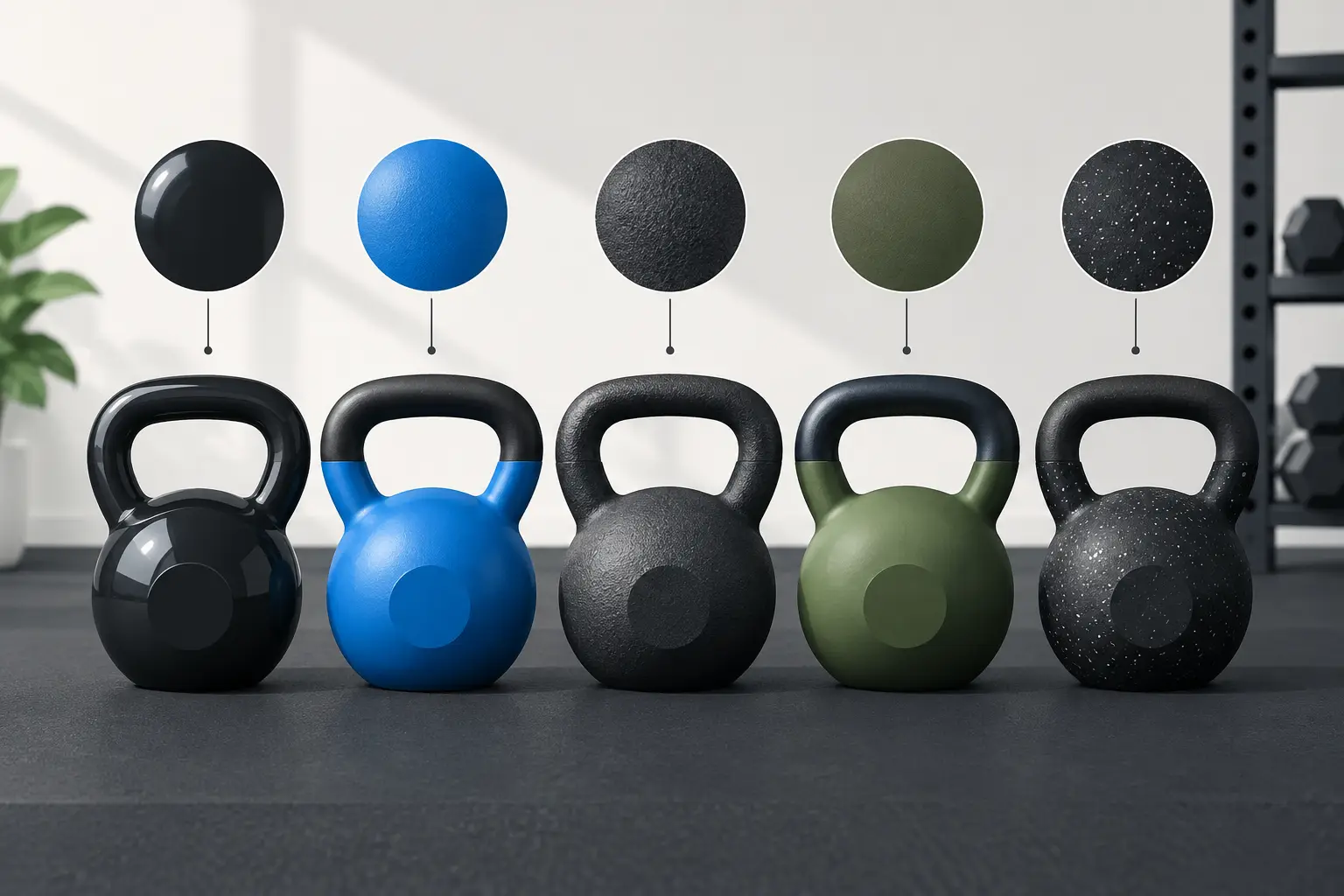
A kettlebell can have the right weight, balanced shape, and a strong cast, then still become the wrong tool if its finish works against your grip. This kettlebell coating guide breaks down what coatings actually change: traction, corrosion resistance, comfort, durability, and how a bell behaves after hundreds of hard sessions.
The coating is not a cosmetic afterthought. It is the surface between your hands and the load. For swings, cleans, snatches, presses, and long sets, that surface matters. Choose it based on how you train, where you train, and how much chalk you use.
What a Kettlebell Coating Actually Does
A kettlebell coating protects metal from moisture, sweat, chips, and oxidation. It also controls the feel of the handle and body. A finish with more texture may provide dependable grip with limited chalk. A smoother finish may reduce abrasion during high-rep snatches and cleans. Neither is universally better.
The wrong assumption is that a rougher coating always equals more control. Excessively rough handles can tear calluses, collect chalk, and make efficient hand transitions difficult. On the other side, a very smooth handle can become slick when sweat builds up. Good equipment finds the intended balance.
Separate the handle from the bell body when evaluating a finish. You rarely grip the body for long, but it takes repeated contact with floors, racks, forearms, and other equipment. A durable body coating protects the bell and keeps a facility looking professional. The handle must support the movements you actually perform.
Kettlebell Coating Guide: The Main Finishes
Powder Coat
Powder coat is one of the most common finishes on hardstyle cast-iron kettlebells. Dry powder is applied to the metal and cured under heat, creating a durable protective layer. It is a practical choice for home gyms, strength rooms, and functional fitness facilities because it stands up well to repeated use.
Most powder-coated bells have a matte or lightly textured feel. This gives many lifters solid control for swings, deadlifts, goblet squats, presses, and carries without relying heavily on chalk. For general strength work, that is a strong advantage.
Texture varies widely. A quality powder coat should feel controlled, not sharp. If it is too aggressive, the handle can punish your hands during snatches, cleans, and high-volume complexes. Fine texture usually works best for all-around training. Heavily textured finishes may suit low-rep strength work but are less forgiving when training speed, volume, or technical lifts.
Powder coat can chip after hard impacts, especially when bells are dropped on rough concrete or repeatedly strike metal storage racks. Chips are not an immediate failure, but exposed cast iron can rust if ignored. Store bells dry and address damaged areas before corrosion spreads.
E-Coat
E-coat, or electrophoretic coating, is applied using an electrical process that helps create even coverage over the metal surface. It is known for corrosion resistance and a comparatively smooth, consistent finish.
This makes e-coat a capable option for lifters who want a cleaner handle feel than a heavily textured powder coat. It can work well for mixed training that includes strength movements, conditioning circuits, and moderate snatch volume. The exact grip still depends on the manufacturer’s final texture and preparation. Do not assume every e-coated bell feels identical.
E-coat generally gives up some of the dry, tactile traction that powder coat enthusiasts prefer. If your hands sweat heavily, train outside, or avoid chalk completely, test the finish before committing to a full set. Good grip is earned through technique and hand care, but the coating still sets the baseline.
Painted and Enamel Finishes
Painted kettlebells can range from basic budget finishes to durable multi-layer coatings. Their performance depends less on the label and more on the quality of surface preparation, paint thickness, and curing process.
A smooth painted body is often comfortable against the forearm in the rack position. That can be useful for beginners learning cleans and presses, especially with cast-iron bells that have larger bodies. But paint on the handle deserves more scrutiny. Smooth paint can feel slick under sweat, while cheap paint may wear quickly around the grip zone.
Painted bells are suitable for moderate home use when construction and handle geometry are sound. They are less appealing for facilities that expect constant contact, high traffic, and frequent loading onto steel racks. A finish that looks clean on day one should still perform after a year of work.
Chrome and Bare Steel Handles
Many competition kettlebells pair a painted or coated body with a smooth steel or chrome handle. The standardized body size of competition bells supports technical training across different loads, while the handle finish is designed to allow fluid hand movement during cleans and snatches.
A smooth handle can be excellent for high-rep work when used with disciplined chalk application. It lets the bell rotate in the hand instead of dragging across the skin. For sport-style kettlebell training, long cycles, and repeated snatches, that reduced friction can protect the hands when technique is efficient.
The trade-off is obvious: smooth steel is less forgiving when wet. Sweat, excess chalk, lotion, and poor hand placement can turn a controlled movement into a grip problem. Chrome can also become slippery if the surface is highly polished. Use only enough chalk to manage moisture. Too much creates a slick paste rather than traction.
Bare or uncoated steel handles may develop surface oxidation in humid spaces. This is usually manageable with regular cleaning and dry storage, but it demands more attention than a fully coated handle.
Choose the Finish for Your Training Style
For hardstyle strength work, a quality powder-coated cast-iron kettlebell is often the most practical choice. Its texture supports explosive swings, heavy cleans, presses, squats, and carries. It is built for repeated contact and straightforward training.
For kettlebell sport, conditioning sets, and technical snatch work, a competition bell with a smooth steel or chrome handle is often the better tool. The stable dimensions across weights support consistent mechanics as you progress. The smooth handle also permits cleaner hand insertion and rotation when your technique is sound.
For beginners, the best choice is usually not the roughest handle or the shiniest finish. Choose a bell with a clean casting, a comfortable handle window, and a moderate grip texture. You need enough traction to feel secure, but not so much that every clean strips your palms.
For commercial gyms and coaching spaces, durability matters beyond personal preference. Powder-coated hardstyle bells tolerate hard use well, while competition bells serve clients training technical lifts and fixed-dimension progressions. A mixed fleet often makes more sense than forcing every athlete into one design.
Handle Feel Matters More Than Marketing Terms
Words like “premium,” “grippy,” and “durable” do not tell you enough. Inspect the handle. Look for a consistent surface with no casting seams, sharp edges, blistered coating, or rough patches where your palm travels.
Handle diameter and window size also affect grip. A finish that feels perfect on a thin handle may feel harsh on a thick one. A competition handle may feel smooth and controlled for a two-hand swing but demanding for a heavy one-hand snatch if your grip is not ready. Coating cannot compensate for poor sizing or poor technique.
If possible, perform a few controlled swings, cleans, and rack holds before buying a full range. For online decisions, prioritize clear product specifications and equipment designed for a defined purpose rather than generic claims.
Maintain the Coating and Your Hands
Wipe down kettlebells after training, especially in humid garages or high-traffic facilities. Sweat and chalk build up over time, changing the feel of any finish. Use a soft cloth and mild cleaning solution when needed, then dry the bell thoroughly.
Avoid aggressive solvents, wire brushes, and abrasive cleaners. They can strip coatings, dull chrome, and create uneven grip zones. Do not leave bells outside or directly on wet concrete. Storage conditions can ruin a good finish faster than normal training does.
For small chips on coated cast iron, clean and dry the exposed spot promptly. A minor touch-up can prevent rust from becoming a larger maintenance issue. If a handle develops a rough burr, flaking finish, or sharp defect, take that bell out of rotation until it is corrected. Tough training does not require damaged equipment.
Your hands need maintenance too. Keep calluses filed flat, wash off excess chalk, and build volume gradually. Torn hands are not proof of commitment. They are often proof that friction, volume, and recovery were poorly managed.
Choose a kettlebell coating that supports the work you plan to repeat. The best finish is the one that stays predictable under load, protects the equipment, and lets you focus on the next clean rep. Earn your reps.