
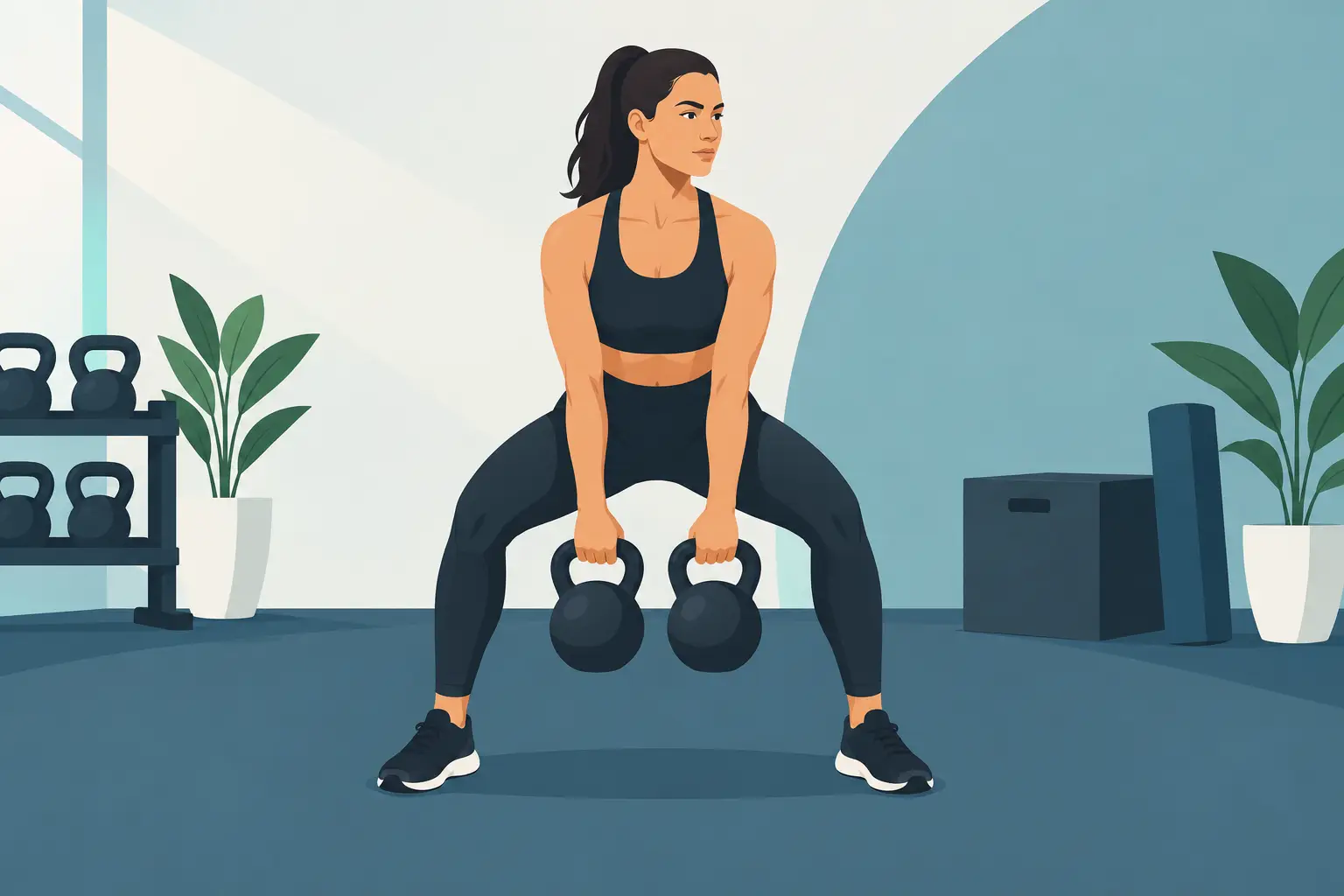
Two kettlebells expose weak links fast. A single bell lets the torso rotate, shift, and compensate. Doubles demand that both sides produce force, stay connected, and control the load at the same time. That is why a guide to kettlebell doubles should begin with a simple point: double-bell training is not just single-kettlebell work with more weight.
Used well, doubles build serious leg strength, pressing capacity, trunk stiffness, grip endurance, and conditioning. Used too soon or loaded too aggressively, they turn clean technique into a fight for survival. Earn your reps first. Then add the second bell.
Why Train With Kettlebell Doubles?
Double kettlebell work gives you bilateral loading without the fixed path of a barbell. You have to stabilize two independent weights while producing force through a full range of motion. That makes doubles especially useful for athletes, home-gym lifters, and coaches who want strength and conditioning from a compact setup.
The clean, front squat, press, and swing become more demanding when both bells move together. The front rack challenges posture and breathing. The double clean asks for precise timing. The press reveals whether one shoulder or side of the trunk is doing less work.
There is a trade-off. Double kettlebells are less forgiving than one bell, particularly at the rack position. If your wrists collapse, elbows drift wide, or lower back extends hard during a press, the answer is rarely more weight. Improve the position first.
Choose the Right Bells for Double Work
For most double-kettlebell training, matched bells are the practical choice. Equal weight keeps the clean, rack, squat, and press symmetrical. It also makes progression measurable. A pair of 16 kg bells is 32 kg in total, but it does not behave like one 32 kg bell. Each arm must clean, stabilize, and control its own load.
Competition kettlebells are a strong option when you plan to progress across several weights or practice longer sets. Their external dimensions remain standardized across the range, so your rack position and hand placement stay more consistent as the load increases. This is valuable for clean and press, jerk, long cycle, and squat work.
Hardstyle cast-iron kettlebells suit lifters who favor powerful swings, cleans, carries, squats, and short, hard sets. Their size changes with weight, which is not a problem for many strength-focused programs, but it does mean each jump in load can feel different at the rack.
Do not buy a pair based on ego. A pair that you can clean once with poor mechanics is not a productive training tool. For a first pair, choose a load you can clean repeatedly, hold securely in the rack, and press with control. If pressing is your limiting factor, build your double practice around cleans, front squats, and carries while continuing to press a manageable load.
Should Both Bells Always Match?
No. Uneven doubles can develop anti-rotation strength, address asymmetries, and create a fresh challenge for experienced lifters. But offset loading is an advanced tool, not a shortcut around proper progression. Start with matched bells. Learn to own the positions. Use offset work later, with a clear reason and controlled sets.
The Positions That Make or Break Doubles
Before building volume, establish four positions: the hinge, the rack, the overhead lockout, and the packed shoulder.
In the hinge, push the hips back while keeping the bells close to the body. The bells should not pull you into a squat or away from the midfoot. In a double swing, maintain tension through the lats so the bells move as one unit rather than drifting apart.
The rack is the foundation for doubles. Keep the handles angled across the palms, wrists neutral, and elbows directed down toward the ribs. The bells should sit close to the body, not hang from the arms. Brace the trunk and breathe behind that brace. If the rack is painful because the bells are smashing into your forearms, revisit your clean and hand insertion before adding sets.
At overhead lockout, finish with the biceps near the ears, ribs controlled, glutes tight, and both feet rooted. Avoid turning a press into a standing backbend. The load belongs over the center of your base, not behind it.
Build the Double Kettlebell Clean First
The double clean is the gateway movement. It teaches the route to the rack and sets the quality standard for squats and presses.
Start with the bells slightly in front of the feet. Hike them back with a strong hinge, then drive the floor away. As the bells rise, keep them close. Guide your hands around the handles and let the bells roll into the rack. Do not curl them high and crash them onto the forearms.
A clean should finish quietly. If every rep slams your arms, the bells are traveling too far from the body or your hands are arriving late. Practice one clean, park the bells, reset, and repeat. Clean singles are a better teacher than rushed sets of ten.
The Core Double-Kettlebell Lifts
Once the clean and rack are dependable, four movements cover most strength and conditioning needs:
- Double swing: Builds explosive hip extension, grip strength, and work capacity. Keep the bells tight and the hinge sharp.
- Double front squat: Develops the legs while demanding a rigid torso and clean rack. Sit between the hips, keep the feet planted, and stand with purpose.
- Double strict press: Builds upper-body strength and exposes trunk and shoulder-control limits. Press only as cleanly as you can lock out.
- Double clean and press: Connects power, strength, and conditioning. Treat every clean as a quality rep, not a way to rush to the press.
Carries also deserve a place in the program. Double rack carries teach breathing under load and reinforce the exact posture needed for strong cleans, squats, and presses. A short, disciplined carry can be more useful than another sloppy high-rep set.
A Practical Guide to Kettlebell Doubles Programming
Train doubles two or three times each week if recovery, mobility, and schedule allow. Beginners to doubles should keep sessions short enough to protect technique. Start with low-to-moderate reps, full rest, and repeatable sets.
A simple strength session might begin with five sets of three double cleans, followed by five sets of five front squats and five sets of three presses. Rest long enough to maintain the rack and lockout. Finish with two or three controlled rack carries.
For conditioning, use a density format rather than chasing fatigue from the first minute. For example, perform two clean and presses plus three front squats every minute for ten minutes. If the final rounds look like the first, add one round next session or use a slightly heavier pair later. If form breaks down, reduce reps before reducing standards.
Do not progress every variable at once. Choose one: add a rep, add a set, shorten rest slightly, improve total quality volume, or move to a heavier pair. This makes progress visible and keeps the joints from paying for impatience.
When to Move Up in Weight
Move up when your current pair is no longer demanding at the planned rep range and your technique remains consistent under fatigue. For pressing, that may mean completing multiple sets of five with no leg drive, no rib flare, and no uneven lockout. For squats, it means controlling the descent and standing without the rack collapsing.
The jump between pairs can be significant. Keep the lighter bells in rotation for volume, warm-ups, technique practice, and conditioning. Serious training is not a straight line upward. Different loads serve different jobs.
Common Mistakes That Stall Progress
The first mistake is choosing bells that are too heavy to clean well. The second is treating double work as a race. Fast reps have value only when positions hold. A rushed clean, loose rack, and bent-arm press may feel hard, but they do not build the pattern you want.
Another common error is ignoring mobility and recovery. Tight hips can limit squat depth. Restricted shoulders can turn an overhead lockout into compensation. Address the restriction, use an appropriate range of motion, and do not force a position that you cannot control.
Finally, do not train doubles hard every day. The total load adds up quickly across the hands, elbows, shoulders, trunk, and legs. Alternate demanding sessions with lighter technique work, mobility, walking, or single-bell practice.
A good pair of kettlebells can cover years of productive training. Start with loads you can own, build clean reps under control, and let consistent work decide when you earn the next pair.