
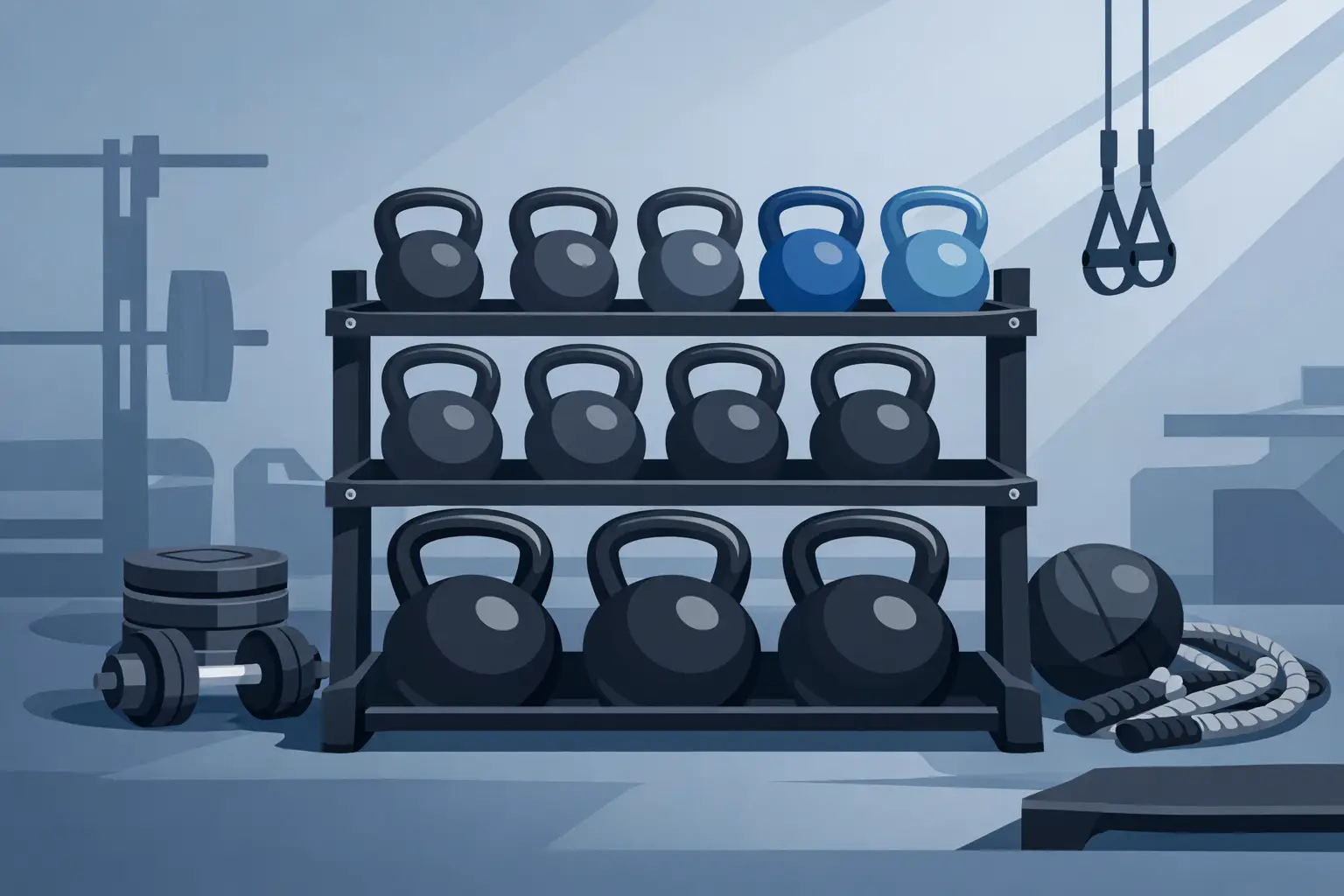
A kettlebell left on the floor is not a storage system. It is a trip hazard, a scuffed surface, and an obstacle between sets. The best kettlebell storage rack keeps your training area clear, protects your bells, and puts the right load within reach when the session gets hard.
For a home gym, a coaching studio, or a busy functional fitness floor, storage needs to match the equipment and the work. A rack that looks clean but shifts under load is not built for serious training. Choose for capacity, stability, shelf design, and the way your athletes actually move through the space.
What Makes the Best Kettlebell Storage Rack?
The right rack does not need unnecessary features. It needs a stable frame, useful shelf spacing, and enough load capacity for the kettlebells you own now and the ones you will add as you progress.
Start with total weight, not just the number of bells. Six competition kettlebells can weigh far more than a rack full of light vinyl dumbbells. A pair of 24 kg bells, a pair of 32 kg bells, and several intermediate sizes add up quickly. Check the manufacturer’s stated capacity, then leave room below the maximum. Equipment storage should not be operating at its limit every day.
A low center of gravity matters. Wide feet and a heavy steel frame reduce movement when you return a bell after swings, cleans, or carries. The rack should sit flat without rocking. If the floor is uneven, solve that problem before loading the shelves. Shims may work in a home setup, but a commercial facility needs a more permanent solution.
Shelf construction is equally important. Flat steel shelves with a raised edge are a dependable choice for most kettlebells. They support the bell body and help prevent it from rolling forward. Rubber-lined shelves reduce metal-on-metal contact and noise, though thick rubber can make the surface less stable for kettlebells with uneven castings. The goal is a firm, level landing surface.
Match the Rack to Your Kettlebell Type
Competition and hardstyle kettlebells store differently because their bodies are built differently. A good rack accommodates both without forcing a crowded layout.
Competition kettlebells have standardized body dimensions across weight increments. A 12 kg bell and a 32 kg bell occupy similar shelf space, which makes row planning simple. Their flat bases help them sit consistently, but their steel shells can scratch painted shelves over time. A durable powder-coated shelf or rubber protection is useful in high-volume settings.
Hardstyle cast-iron kettlebells vary more in body width and handle shape. Heavier bells are often wider, and rough or textured castings can take more space than expected. Measure the widest bells in your collection before choosing shelf length and depth. Do not assume every 3-tier rack fits every cast-iron bell comfortably.
If you train with both styles, organize them by purpose rather than trying to make every row look uniform. Keep competition bells together for sport work, double-kettlebell strength sessions, and standardized loading. Place hardstyle bells where they are easy to grab for swings, carries, presses, and general conditioning. Clear organization saves time and reduces loading mistakes when fatigue sets in.
Choose the Right Rack Size for Your Space
A compact two-tier rack works for a small home gym with a focused selection of bells. It is usually the right starting point if you own a few loads for presses, swings, goblet squats, and carries. Keep enough open floor space to train safely. A rack that consumes the swing area is not helping your setup.
A three-tier rack suits a growing collection, personal-training studio, or garage gym shared by more than one athlete. It gives you room to separate lighter, moderate, and heavy weights. The trade-off is vertical access. The top shelf should hold bells you use less often or lighter bells that are easy to lift down under control.
Long horizontal racks are often the better choice for commercial gyms and group-training spaces. They keep weights visible and reduce congestion around a tall storage tower. Coaches can see what is available at a glance, and athletes do not need to reach above shoulder height for a working bell.
Leave clearance around the rack. You need enough room to load and unload without backing into a wall, bench, or another athlete. In a busy facility, place the rack away from the main traffic lane. Kettlebells should be easy to access, but no one should walk through a storage zone during a session.
Shelf Depth, Spacing, and Placement Matter
A shelf must be deep enough to support the full base of the bell. If a kettlebell hangs over the front edge, it can be knocked off balance when another bell is returned nearby. Deeper shelves are especially useful for large hardstyle bells and competition bells with broad bases.
Spacing between shelves determines whether you can grip the handle properly. Tight shelf spacing may allow the bell to fit, but it can force you to drag it out by the horn or squeeze your hand between the handle and the shelf above. That is inefficient and increases the chance of pinched fingers.
Place the heaviest kettlebells on the lowest shelf. This is basic load management. It keeps the rack grounded and limits how often you lift heavy bells from elevated positions. Bells used for heavy swings, deadlifts, and carries belong low. Lighter bells for warm-ups, mobility work, and technique practice can go higher.
Keep pairs together. Double-kettlebell work demands accurate loading, especially for presses, front squats, cleans, and long-cycle training. Store matching weights side by side, with the markings facing outward. If your bells use color bands, keep the labels visible. If they do not, add simple weight markers to the shelf edge rather than relying on memory.
Do Not Buy Storage Based on Appearance Alone
A wood display shelf may look sharp in a private studio, but it must be built for concentrated load. Kettlebells create high pressure through relatively small contact points. Thin shelving, decorative brackets, and lightweight furniture are not substitutes for purpose-built equipment storage.
Likewise, a generic dumbbell rack can work only if its shelves are flat, deep, and rated for the total load. Cradled dumbbell rails are often a poor fit. Kettlebells can sit unevenly on curved rails, and their handles may interfere with the tier above.
Wheels are another trade-off. Mobile racks help coaches reorganize a facility, but casters introduce a potential weak point. If you need them, choose heavy-duty locking casters rated for the full rack load. Lock every wheel before use. For most home gyms, fixed feet are simpler and more stable.
Wall-mounted storage can free floor space, but it demands careful installation. The mounting surface and hardware must support dynamic daily use, not just the static weight of the bells. When there is any doubt, choose a freestanding rack with a wide base. A fallen storage system can damage equipment, walls, and people.
Build a Storage Layout That Supports Training
Think of the rack as part of your training flow. Place the most-used weights where they are quickest to reach. If your current program centers on 16 kg and 20 kg bells, those loads should not live on the top tier behind specialty tools.
A practical layout for many lifters is simple: lighter technique and mobility bells on top, regular working weights at waist-to-knee height, and the heaviest bells on the bottom. Keep macebells, clubbells, and other long-handle tools in separate storage when possible. Mixing them into a crowded kettlebell rack makes access slower and less safe.
Clean the rack periodically. Chalk dust, rubber debris, and moisture collect on shelf surfaces. Wipe down bells before storing them, particularly cast iron used in humid garages. A few minutes of maintenance protects the finish, reduces corrosion risk, and keeps grips ready for the next session.
Incore Sports equipment is built for repeated work, and the storage around it should follow the same standard. Buy the rack that fits your actual loads, gives each bell a stable home, and leaves room to progress. Then put the bells back after every set. Discipline starts before the first rep and continues after the last.