
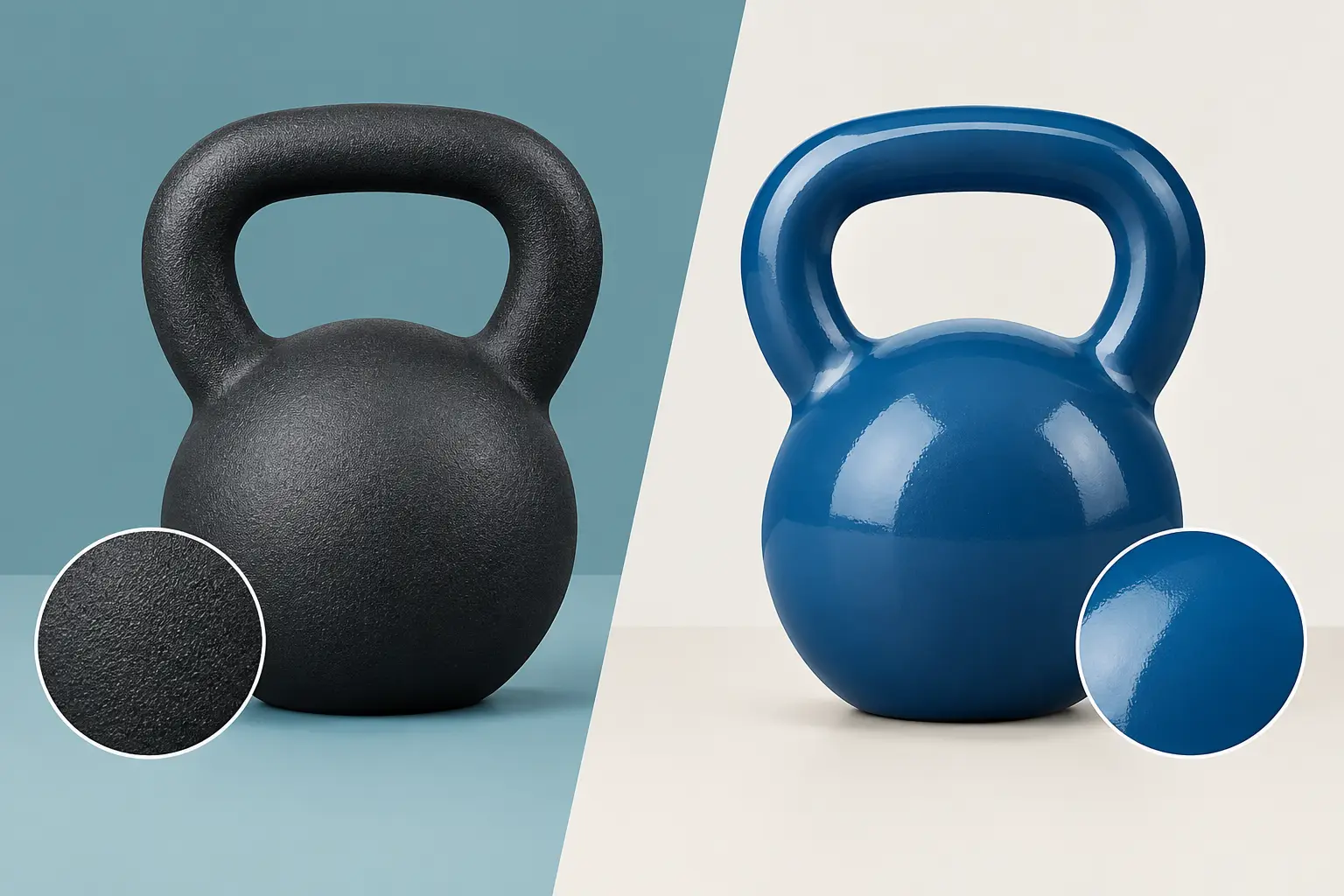
A kettlebell finish is not decoration. It affects how the bell feels in your hand, how it holds up after drops and rack work, and how much maintenance it demands. When comparing powder coated versus painted kettlebells, the better option depends on how you train, where you train, and whether grip consistency matters more than a glossy appearance.
A finish will not fix poor casting, an awkward handle, or the wrong training weight. But once the fundamentals are right, it can make a real difference over hundreds of swings, cleans, presses, and snatches. Earn your reps with equipment that suits the work.
Powder Coated Versus Painted Kettlebells: The Core Difference
Powder coating is a dry finishing process. Colored powder is applied to the metal and then cured with heat, forming a bonded outer layer. A quality powder-coated kettlebell usually has a textured, low-gloss surface that is designed to resist abrasion and provide a more secure feel in the hand.
Painted kettlebells use liquid paint, often applied in multiple coats and baked or air-dried depending on the manufacturer. The result is commonly smoother and glossier. Painted finishes can look clean when new, but their performance varies widely with paint quality, preparation of the cast iron, and the thickness of the coating.
Neither label guarantees quality by itself. A poorly applied powder coat can chip. A well-applied industrial paint can last for years. Still, for hard, repeated training, powder coating generally has the advantage in durability and grip.
Grip: Where the Finish Becomes Training Equipment
Your hands do not experience a kettlebell finish in a showroom. They experience it during the 18th minute of a conditioning session, after sweat has built up and your forearms are fatigued.
A textured powder-coated surface usually offers more friction than smooth paint. That matters for swings, high pulls, cleans, and especially snatches. The bell is less likely to shift unexpectedly in the palm, which can improve control without forcing you to over-grip the handle.
That said, more texture is not always better. An aggressive powder coat can feel rough during high-volume snatch work, particularly for athletes still developing efficient hand insertion. It may increase friction against the skin if you drag the handle rather than allowing it to rotate smoothly around the hand. Technique remains the first defense against torn calluses.
Painted kettlebells tend to feel smoother. Some lifters prefer this for presses, goblet squats, carries, and lower-volume strength work because the handle can move more freely in the hand. But smooth paint can become slick when sweat, dust, or skin oils build up. If you train in a humid garage, a busy group facility, or outdoors, that loss of grip is more noticeable.
Chalk changes the equation. A light layer can make either finish more manageable, but it does not turn a slick, glossy handle into a dependable high-rep snatch tool. Use chalk as support, not as a workaround for a finish that does not fit your training.
Durability Under Real Use
Kettlebells get knocked together, set down hard, loaded into vehicles, and stored on racks. A finish needs to handle more than careful curls on rubber flooring.
Powder coating is generally more resistant to scratching, scuffing, and minor impacts than conventional paint. It is a practical choice for home gyms, training studios, and facilities where the same bells see daily use. A powder-coated cast-iron bell can develop cosmetic marks over time, but the coating usually wears gradually rather than flaking away at the first hard contact.
Paint is more vulnerable to chips and scratches, especially on the base, handle, and outer corners of the bell. Once a chip exposes bare iron, moisture can eventually create surface rust. This is not a reason to discard the bell. Small areas can be cleaned, treated, and touched up. It does mean painted kettlebells require more attention if they are stored in damp spaces or used outside.
For a controlled indoor setup, paint may provide adequate durability. For high-traffic training, frequent transport, or athletes who train with intent rather than caution, powder coating is usually the more forgiving choice.
Appearance Is Not Nothing, but It Is Not the Main Job
Painted kettlebells often win the first visual impression. A smooth, glossy finish can make a bell look polished and bright, which may suit a boutique studio or a clean home setup. Color coding can also be easy to read at a distance.
Powder-coated bells tend to look more industrial. Their matte or lightly textured surface fits hardstyle training, functional fitness, and serious free-weight environments. They may show chalk marks more readily, especially in darker colors, but chalk residue is temporary. Wipe the bell down after training and move on.
Do not choose a kettlebell only because it looks good on the rack. A premium finish that works against your grip or wears poorly under your normal training is the wrong finish.
Maintenance Requirements
Both finishes benefit from basic care. Wipe sweat, chalk, and grime from the handle and body. Keep kettlebells dry when possible. Avoid leaving them on wet concrete, exposed patios, or directly in the path of rain and snow.
Powder-coated kettlebells are lower-maintenance because the finish provides stronger protection against everyday scuffs and moisture exposure. Still, inspect chips or deep gouges. If bare metal appears, dry the area and address it before rust spreads.
Painted kettlebells need more frequent checks. Inspect the bottom of the bell, where repeated contact with floors and racks causes the most wear. Minor paint damage is normal in a tool that is being used. The goal is not to preserve a factory-new appearance forever. The goal is to prevent neglected damage from affecting the bell's surface or long-term condition.
Avoid harsh solvents and abrasive wire brushes on either type unless you are intentionally repairing damaged metal. A damp cloth followed by a dry wipe handles most routine cleaning.
Which Finish Fits Your Training?
Choose powder coating if your training includes frequent swings, cleans, snatches, conditioning circuits, or shared use. It is also the stronger choice for garage gyms, performance facilities, and athletes who want a secure grip with less concern about cosmetic wear. The textured surface supports control when training gets sweaty and demanding.
Choose paint if your training is mostly lower-volume strength work, carries, squats, presses, and controlled indoor sessions. It can also make sense when you prefer a smoother handle feel and are prepared to maintain the finish over time. A painted bell is not automatically inferior. It is simply less suited to rough treatment and high-friction work in many cases.
Your kettlebell category matters as well. Competition kettlebells are built around standardized dimensions and often use durable coated finishes designed for repeated sport-style lifting. Hardstyle cast-iron kettlebells prioritize rugged construction, and a quality powder coat matches their purpose well. Do not compare finish in isolation from handle shape, bell geometry, casting quality, and your intended lifts.
Do Not Let Finish Distract From the Bigger Buying Decision
A secure finish cannot compensate for choosing a bell that is too heavy, too light, or poorly suited to your current skill level. Beginners often need a manageable load and a comfortable handle more than they need the most aggressive texture available. Experienced lifters need consistency across a range of weights, particularly if they train complexes, ladders, or timed intervals.
Before buying, hold the following standard: the kettlebell should let you train with control, progress with confidence, and withstand the work you actually perform. If you primarily snatch and swing, favor grip and abrasion resistance. If you train slowly and keep equipment indoors, a smooth painted finish may serve you well.
The right bell should disappear from your attention once the set starts. Choose the finish that supports your hands, protect it with basic care, and put the focus back where it belongs: disciplined training.