
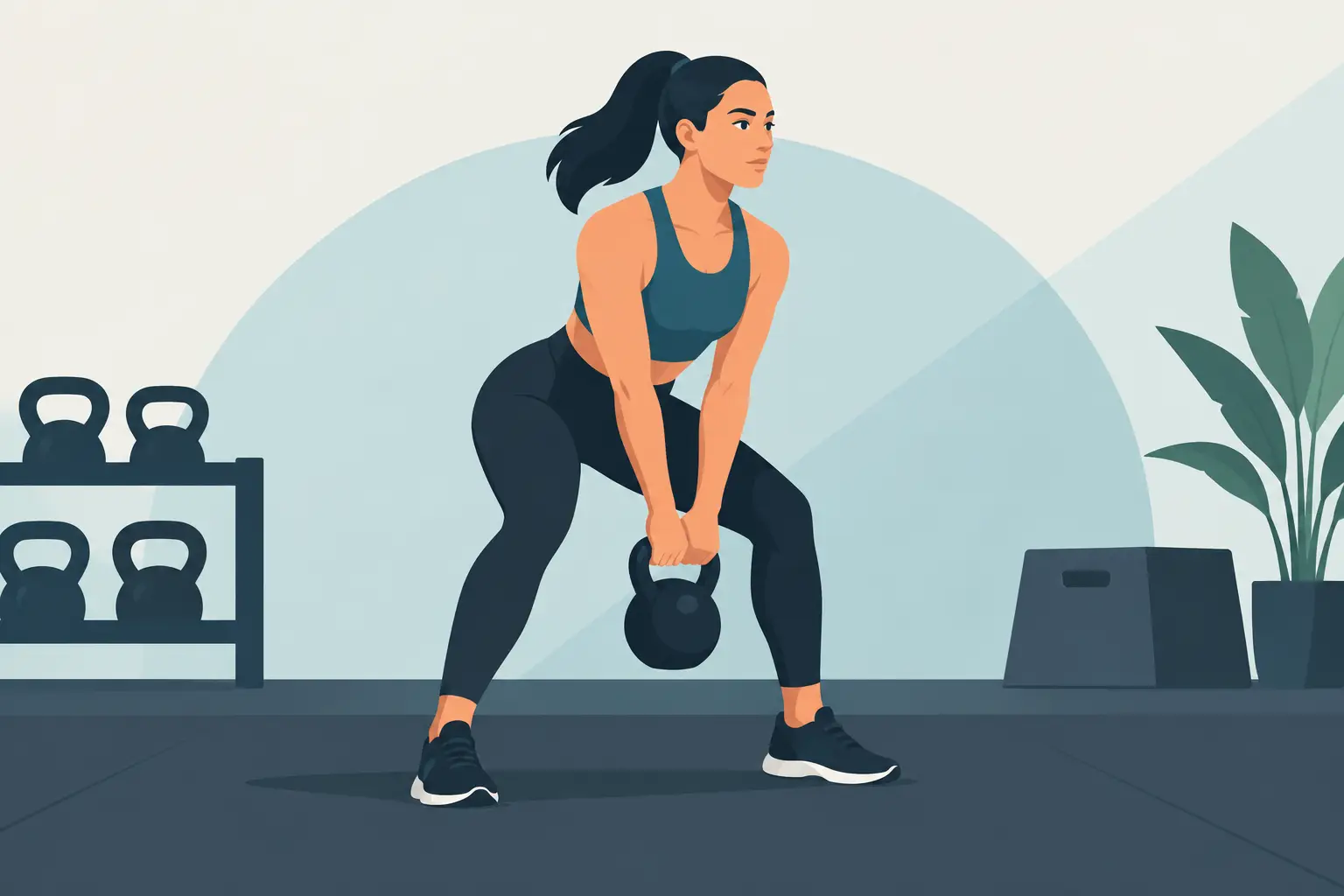
A kettlebell conditioning workout should leave you worked, not wrecked. The goal is repeatable power under fatigue: clean reps, controlled breathing, and enough reserve to train again. That is different from chasing a random sweat session. Conditioning built on sound kettlebell mechanics develops strength endurance, grip, hip power, and the ability to recover between efforts.
The bell is unforgiving when form breaks down. A swing with a soft hinge becomes a lower-back lift. A snatch done with a loose grip beats up the forearm. Earn your reps by choosing a load and format that let technique hold together from the first round to the last.
What a Kettlebell Conditioning Workout Should Train
Good conditioning is not only about a high heart rate. It is the capacity to produce useful force repeatedly, recover efficiently, and keep positions under fatigue. With kettlebells, that means practicing a powerful hip hinge, braced carries, stable overhead work, and purposeful transitions.
The main advantage is density. A single bell can train posterior-chain power through swings, total-body tension through cleans and presses, leg strength through squats, and trunk control through loaded carries. You can create a demanding session in a small space without turning it into a complicated circuit.
There is a trade-off. High-rep kettlebell work is technically demanding. Beginners should not build conditioning around fast snatches, long sets of overhead work, or complex flows before they own the swing, clean, squat, press, and carry. More exercises do not automatically create better conditioning. Better positions do.
Choose the Right Bell Before You Start
Load determines whether the session builds capacity or teaches poor habits. A bell that is too light may encourage sloppy, rushed reps. A bell that is too heavy forces compensations and shortens the quality work you can complete.
For ballistic work such as swings and cleans, choose a weight you can accelerate sharply while maintaining a strong hinge and neutral spine. For presses and overhead carries, the right bell often feels more conservative. That is normal. Overhead strength and shoulder stability usually limit the load before the legs or hips do.
A competition kettlebell is a strong choice if you plan to train cleans, jerks, snatches, or longer sets. Its standardized dimensions keep the handle and bell position consistent as you progress in weight. A hardstyle cast-iron kettlebell suits swings, squats, carries, and general strength work exceptionally well. Both can build conditioning. The right choice depends on how you train, not on which style looks more advanced.
Do not start with a 32 kg bell because it seems like the serious option. Start with a weight you can control. Progress comes from more quality work, better density, or a modest load increase over time.
The 20-Minute Strength-Endurance Session
This kettlebell conditioning workout uses a simple work-rest structure: 40 seconds of work followed by 20 seconds of rest. Complete four exercises in sequence, rest two minutes after each full round, and perform three to four rounds.
Use one kettlebell. Select a load that allows crisp swings and controlled squats for every round. If your hinge or rack position fails, reduce the work interval, lower the load, or stop the set. Conditioning does not reward technical collapse.
- Two-hand kettlebell swing - Drive the bell with the hips. Keep the arms connected to the body and let the bell float from power, not shoulder effort.
- Goblet squat - Hold the bell close to the chest, brace before descending, and keep the feet rooted. Move through a range you can control.
- Alternating clean - Clean the bell into the rack without looping it away from the body. Switch hands as needed, but keep the reps even.
- Suitcase carry or suitcase march - Hold the bell at one side and resist leaning toward it. Switch sides halfway through the interval.
The swing raises power output. The squat builds leg endurance under tension. The clean adds coordinated pulling and a strong rack position. The carry forces the trunk to stabilize while the breathing rate is high. There is no filler here.
For most intermediate trainees, three rounds is enough on the first attempt. If you finish each round with clean mechanics and your breathing settles during the two-minute break, add a fourth round next time. Do not shorten rest simply to make the session feel harder. Rest is part of the design because it protects the quality of the next effort.
How Hard Should Conditioning Feel?
Aim for a hard but sustainable pace. You should be able to speak a short sentence during the rest interval, though you may not want to. If you need several minutes to recover after one round, the load, pace, or exercise selection is too aggressive.
A useful standard is repeatability. Your final swing set should look close to your first. Your final squat should reach the same depth. Your carry should not turn into a side bend. When output and position fall sharply, the session has stopped being productive conditioning and become fatigue practice.
Athletes with a strength background often make one mistake: they select a strength-training load and try to force it into a conditioning format. Conditioning loads are sometimes lighter than expected because they must be moved repeatedly with speed and control. That is not backing off. It is matching the tool to the task.
Progress Without Chasing Chaos
Run the same session for two to four weeks before changing it. Repetition gives you a baseline. You can see whether the bell moves faster, whether your recovery improves, and whether your positions remain solid under the same demand.
Change one variable at a time. Add a round, extend the work period from 40 to 45 seconds, reduce the between-round rest slightly, or move to the next kettlebell weight. Do not increase all four at once. Small changes are easier to recover from and easier to measure.
If strength is your main goal, perform conditioning after your heavy lifts or on a separate day. Keep it short enough that it does not erase the recovery needed for squats, deadlifts, presses, or sport practice. If general fitness is the priority, two to three kettlebell conditioning sessions per week can work well, provided at least one day includes easier movement or full rest.
Common Errors That Limit Results
The first error is turning every session into a test. A conditioning workout should build capacity, not demand a personal record each time. The second is rushing transitions. Set the bell down with control, reset your grip, and begin the next movement with intent. A few seconds of discipline beats a careless rep.
The third is ignoring the hands. High-volume kettlebell work can create hot spots and torn calluses when the handle is gripped too tightly. Keep the hand secure but relaxed, especially in swings and cleans. Chalk can help, but it will not fix excessive friction from poor timing or death-gripping the handle.
Finally, do not confuse exhaustion with progress. A session that leaves you unable to train productively for several days is poorly dosed for most people. The best plan is the one you can repeat, track, and improve.
Build Capacity That Carries Over
Kettlebell conditioning works because it asks the body to produce force, organize tension, and recover while the clock keeps moving. Keep the exercise menu simple. Use equipment built for repeated work. Respect technique when fatigue arrives.
Train hard enough to demand adaptation, but leave the gym knowing you could return and earn your reps again.