
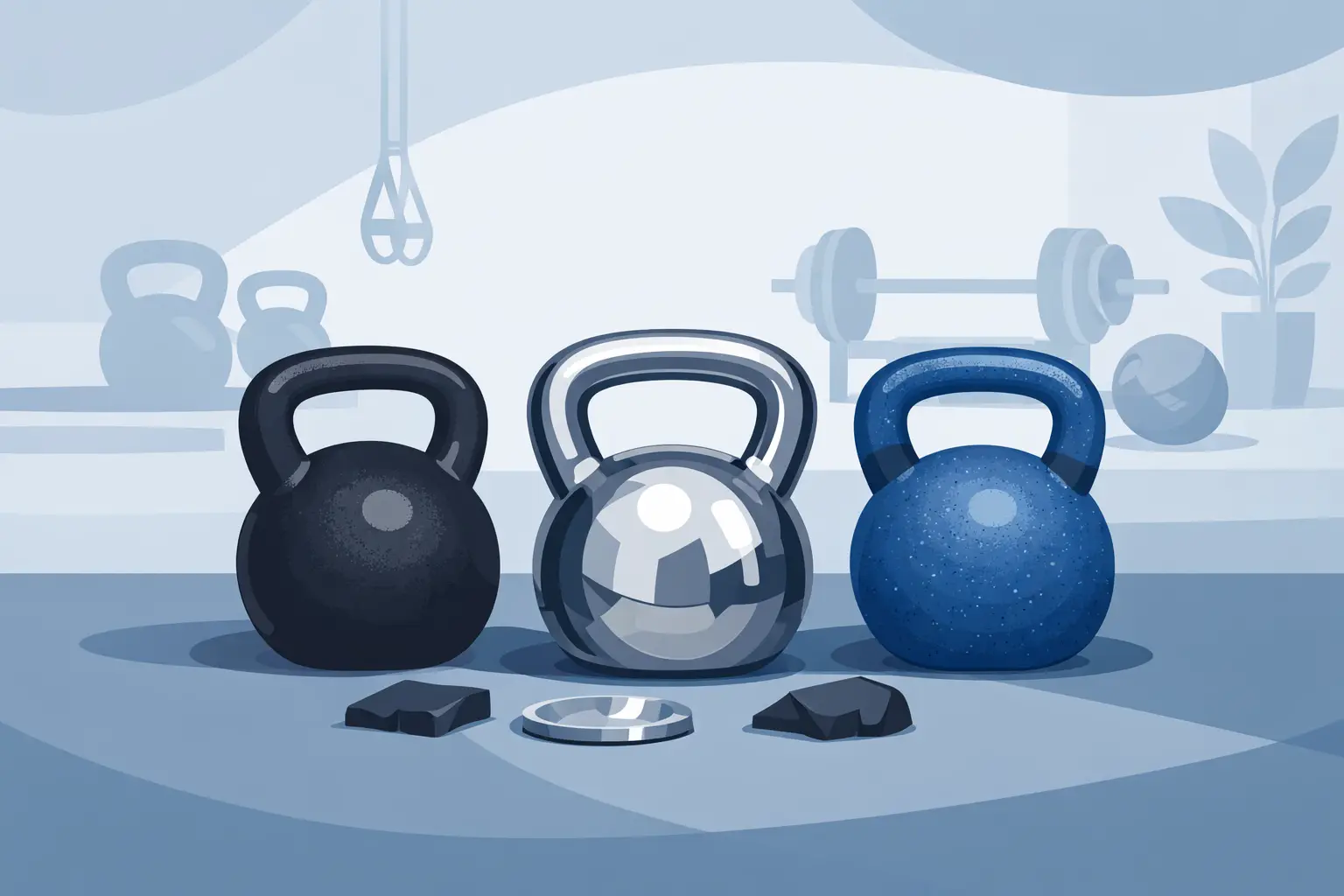
A kettlebell can carry the right number on its face and still be the wrong tool for your training. Knowing how to choose kettlebell material helps you avoid slippery finishes, fragile shells, awkward handles, and equipment that does not hold up to repeated swings, cleans, presses, and rack work.
Material affects more than appearance. It influences durability, handle feel, overall dimensions, balance, floor protection, and the type of training the bell supports best. For serious strength work, the decision usually comes down to solid cast iron or steel competition construction. The right choice depends on how you train, where you train, and what progression looks like over the next several years.
Start With Training Purpose, Not Finish
Do not choose a kettlebell because a coating looks clean in a product photo. Start with the movements and training system you will use.
A hardstyle cast-iron kettlebell suits general strength, powerful ballistic work, carries, goblet squats, and home-gym training. Its dimensions usually increase with weight. A 12 kg bell is smaller than a 24 kg bell, and that changing size can be useful for lifters who want a straightforward, traditional tool.
A competition kettlebell is built around standardized external dimensions. A 12 kg and 24 kg competition bell are the same size on the outside, while the internal cavity changes to create the weight difference. This consistency matters for long-cycle work, snatches, jerks, high-repetition sets, and athletes who want the rack position and handle geometry to feel familiar as they progress.
Material should serve the training demand. It is not a badge of toughness by itself.
Cast Iron: The Traditional Strength Tool
Solid cast iron is the benchmark material for hardstyle kettlebells. A quality cast-iron bell is made as one piece, with the handle and body formed together. That one-piece construction is a major advantage. There are no welded seams or attached handles that can become weak points under repeated loading.
Cast iron is dense, durable, and well suited to explosive work. It gives a classic kettlebell shape with a broad body and a handle that often becomes larger as the bell gets heavier. For swings, deadlifts, squats, carries, and presses, this design feels direct and stable.
The trade-off is dimensional change. Moving from a lighter bell to a much heavier cast-iron bell may alter the handle width, window size, and rack position. Most general trainees adapt without trouble, but the change can matter when technique is highly repetitive or when training for kettlebell sport.
Look for a smooth, single-piece casting with no visible seams, sharp edges, or rough handle texture. Poor casting can create hot spots on the hands, especially during high-volume swings and snatches. A durable powder-coated finish is often a strong choice for cast iron because it offers grip without feeling excessively abrasive.
Cast iron can chip if it is dropped onto concrete or stored carelessly. That does not make it weak. It means the coating needs sensible protection. Use rubber flooring, control the bell between sets, and do not confuse equipment abuse with hard training.
Who Should Choose Cast Iron?
Choose cast iron if your work centers on foundational strength and conditioning. It is an excellent fit for home gyms, personal training studios, functional fitness spaces, and athletes who want a durable bell for years of swings, cleans, presses, rows, squats, and loaded carries.
It is also the practical choice if you prefer the feel of a traditional kettlebell and do not need every weight to share the same outer dimensions.
Steel Competition Kettlebells: Standardized for Repetition
Competition kettlebells are typically made from steel and formed as hollow shells with a consistent size across the range. This is not a lesser construction. It is a purpose-built design for technical, repetitive kettlebell training.
The standardized body gives each weight a predictable rack position. Your forearm angle, wrist placement, and hand relationship to the handle remain more consistent when moving from 16 kg to 20 kg, then to 24 kg. That can make skill development cleaner, especially for clean and jerk, snatch, and long-cycle training.
A quality steel competition bell should have a smooth handle, even balance, a stable flat base, and a uniform shape. The handle is usually wider and more open than on many traditional bells, giving the hand room to rotate during snatches and to settle comfortably in the rack. This is useful for high-repetition work, but individual hand size still matters.
Competition bells often use a painted or coated exterior that holds up well to regular gym use. The handle may be left uncoated or finished differently to support chalk use and smoother hand movement. If you train high-volume snatches, avoid overly glossy or slick handles. Grip should be reliable, not sticky.
The trade-off is that a steel competition kettlebell can feel more specialized. If your training is mostly two-handed swings, goblet squats, and occasional presses, the precision of identical dimensions may not be necessary. But for structured technique work and measurable volume, it earns its place.
How to Choose Kettlebell Material for Your Space
Your training floor changes the decision. Cast iron and steel are both durable, but neither should be repeatedly dropped on unprotected surfaces.
In a home gym, cast iron with a quality powder coat is often the simplest long-term option. Add dense rubber flooring and you have a dependable setup for strength and conditioning. If space is limited, choose the weights you will use consistently rather than building a collection around novelty finishes.
In a commercial facility or coaching environment, steel competition bells bring a major organizational advantage. Their shared dimensions make storage neater, coaching cues more consistent, and progression easier to manage across multiple athletes. They are particularly useful when classes include timed sets, technical drills, and regular switching between loads.
For outdoor training, both materials work, but the finish becomes more important. Moisture, grit, and rough pavement punish coatings. Wipe bells down after use and never leave them exposed to rain. Surface rust is preventable maintenance, not a training feature.
Coatings Matter, but They Are Not the Core Material
Coating affects grip, maintenance, and appearance. It does not replace sound construction.
Powder coating is common on cast-iron kettlebells. A good powder coat provides a slightly textured grip that works well with chalk and resists routine wear. It is a strong all-around option, though very rough coatings can irritate hands during high-rep work.
Painted finishes are common on competition bells. They provide clear color coding by weight and a smooth exterior that sits comfortably against the forearm. The handle feel matters more than the body finish, so assess whether it supports your preferred use of chalk and hand rotation.
Vinyl, neoprene, plastic-shell, and cement-filled kettlebells are generally built for low-cost entry-level use, not serious progression. They may be adequate for light exercise, but they can crack, shift, wear poorly, or feel bulky for their stated weight. If you plan to train consistently, buying a solid cast-iron or steel bell once is usually the more disciplined decision.
Handle Construction Is Part of the Material Decision
Do not separate material from handle design. The handle is where every rep is earned.
With cast iron, inspect the casting quality. The underside of the handle should feel clean, with no ridge that catches the fingers during swings. The window should allow a stable grip without forcing the wrist into an awkward angle. Heavier hardstyle bells may have thicker handles, which can build grip strength but may challenge smaller hands.
With steel competition kettlebells, look for a handle that supports relaxed rotation. High-volume training punishes unnecessary gripping. A good competition handle lets the bell move around the hand during snatches rather than dragging across the palm.
If possible, test the bell in the rack before buying. A comfortable overhead hold is useful, but the rack tells you more. The bell should rest securely against the forearm and upper arm without creating pressure that makes you fight the position.
Choose for the Next Stage of Training
A material choice should support progression, not just your first session. Cast iron makes sense when you want a rugged strength tool that covers a wide range of fundamental movements. Steel competition construction makes sense when technique, consistency, and high-repetition performance are central to your plan.
Do not buy a 32 kg bell as your first kettlebell because it looks serious. Start with a load you can control, then add weight as your mechanics and work capacity improve. The material will not fix poor technique, but the right construction removes unnecessary friction from training.
Pick the bell that matches the work you will repeat next week, next month, and next year. Then put it on the floor, take the handle, and earn your reps.