
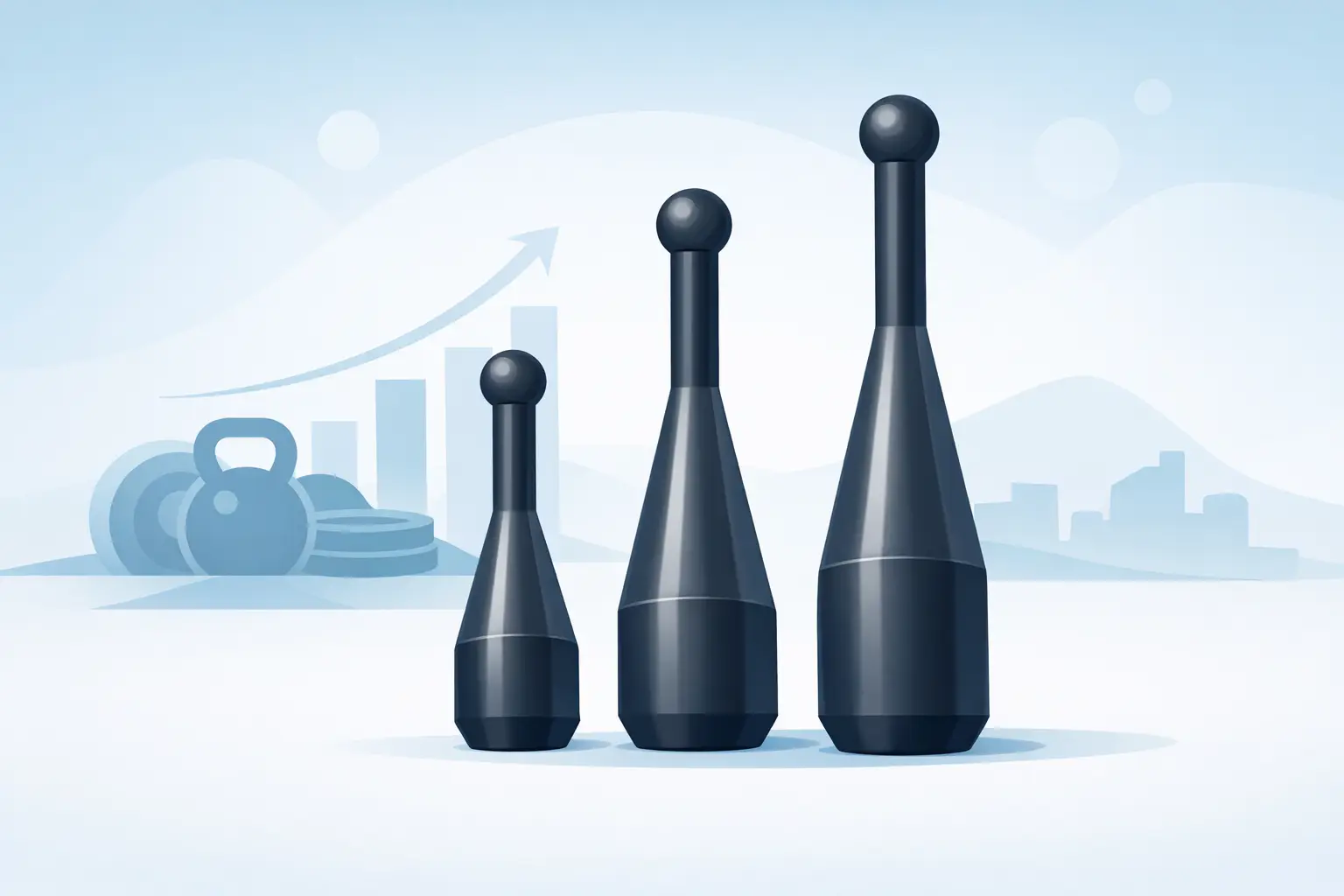
A steel clubbell is not a dumbbell with a handle. Its weight sits away from your hand, creating leverage that demands grip, shoulder control, trunk stability, and precise movement. When comparing steel clubbells for sale, the best choice is not simply the heaviest tool you can lift. It is the club you can control through clean, repeatable reps.
Clubbell training rewards patience. The offset load turns simple-looking patterns into serious work for the hands, forearms, shoulders, upper back, and core. Choose the right weight, learn the positions, and earn your reps.
Why Steel Clubbells Are Built for Serious Training
Steel clubbells are designed for repeated impact-free loading, not occasional novelty workouts. Their solid construction gives the tool a compact, dense feel and a consistent balance point. That matters when you are moving through casts, shield casts, mills, swipes, and presses.
Unlike adjustable implements, a fixed-weight steel clubbell has no moving parts, pins, plates, or collars to check before every session. Pick it up and train. For home gyms, coaching spaces, and functional fitness facilities, that simplicity is valuable.
Steel also holds up to frequent use. A quality powder-coated finish helps protect the surface and provides a dependable grip without the sharp, overly aggressive texture that can tear up your hands. The goal is control, not a fight with the handle.
The trade-off is straightforward: solid steel clubbells require more space and investment than improvised training tools. They are also less forgiving when dropped. Use a clear training area, protect flooring where needed, and treat every swing as a loaded movement.
What Clubbell Training Actually Develops
Clubbells belong in the space between strength work and movement practice. They can build pressing strength, but their strongest value is what happens around the shoulder complex and through the torso as the load moves.
A properly executed cast requires you to stabilize the shoulder, guide the club behind the body, and return it without losing posture. Mills add circular coordination and grip demand. Swipes teach you to generate force from the hips while keeping the arms connected to the body. These are not isolated exercises. They are full-chain patterns.
This makes clubbells useful for lifters who need more shoulder mobility under control, athletes who want rotational strength, and coaches building resilient movement capacity. They also pair well with kettlebell training. Kettlebells are excellent for ballistic strength and foundational lifts. Clubbells add a different leverage challenge and more freedom to train circular patterns.
Do not mistake mobility work for easy work. A light club can expose weak positions quickly. If your wrist bends back, your shoulder rises toward your ear, or your ribs flare during a cast, reduce the load and own the pattern first.
Steel Clubbells for Sale: How to Choose a Starting Weight
Starting weight depends on training history, grip strength, shoulder health, and the movements you plan to learn. It also depends on whether you are using one club or a pair. The numbers below are starting points, not a test of toughness.
For most beginners, a single 5 to 10 lb clubbell is enough to learn fundamental casts, mills, pendulums, and mobility-based drills. Stronger trainees may be tempted to start heavier, especially if they already barbell squat, press, or swing heavy kettlebells. That strength helps, but clubbell leverage is different. A heavy bench press does not automatically prepare your shoulders for a controlled mill.
Many men with a solid strength background can begin with a 10 to 15 lb single club for basic patterns. Many women with training experience can begin with a 5 to 10 lb single club. But shoulder history matters more than labels. If you have limited overhead range, past irritation, or little experience with offset tools, start lighter.
Two-handed work can support a heavier club, especially for shield casts and swipes. One-handed mills and casts require more restraint. Buy for the movement you want to train, not for the ego lift you want to display.
A useful test is simple: you should be able to complete several smooth practice sets without changing your posture, gripping excessively, or feeling joint pain. Muscle fatigue in the forearms, upper back, and trunk is expected. Sharp pain or repeated loss of control is not.
Handle Design and Balance Matter
The clubbell’s handle is your connection to the load. Diameter, texture, length, and the transition from handle to body all influence how the tool feels in motion.
A handle that is too thick can turn every session into grip survival. One that is too thin may feel unstable or uncomfortable during longer sets. Most trainees benefit from a handle that allows a secure hold while still letting the club rotate naturally in the hand. The finish should support grip, particularly when your hands are warm, without creating unnecessary abrasion.
Balance is equally important. The club’s mass should feel intentional through the arc, not lopsided or unpredictable. A well-made steel clubbell gives clear feedback: when your path is clean, it moves cleanly. When your timing is off, you feel it immediately.
That feedback is why clubbells are worth using with discipline. They do not hide poor movement. They reveal it.
Match the Clubbell to Your Training Goal
If your priority is shoulder mobility and joint control, stay light and use controlled tempo. Focus on halos, pendulums, casts, and mills with clean breathing and stable ribs. This work is valuable on recovery days, before upper-body strength sessions, or as a focused skill practice.
If you want rotational power and athletic conditioning, use two-handed swipes, shield casts, and dynamic transitions. The hips initiate force, while the hands and trunk direct it. Keep the movement crisp. Conditioning does not require frantic reps.
For grip and upper-body strength, use presses, rows, offset carries, and slower eccentric casts. Heavier clubbells can be effective here, but only after you can manage the lighter load through full, controlled ranges.
A single clubbell is enough for serious training. Pairs add options for symmetrical pressing, front-rack work, and bilateral patterns, but they are not required on day one. Start with the tool that lets you train consistently. Add complexity after your technique earns it.
Build Progression Before You Add Weight
The fastest way to stall is to jump from light skill practice to a club that pulls you out of position. Progression can come from better range of motion, smoother transitions, more total quality reps, slower eccentrics, or reduced rest. Weight is only one variable.
For example, begin with controlled two-handed casts. Once the movement is stable, increase repetitions. Then improve the depth and consistency of the arc. After that, introduce one-handed variations or a modest increase in load. This approach builds usable strength rather than collecting random movement skills.
Train clubbells two or three times per week at first. Short sessions work well. Ten focused minutes of casts, mills, and carries can deliver more value than a long workout filled with rushed reps. Keep your shoulders fresh enough to learn.
Common Buying Mistakes
The most common mistake is buying too heavy. The second is choosing a club based only on general strength numbers. Clubbells create a long lever, and leverage changes the demand on the wrist, elbow, shoulder, and trunk.
Another mistake is treating clubbells as a replacement for every other free weight. They are specialized tools. Use them alongside kettlebells, barbells, bodyweight training, and conditioning work when those tools serve your plan. A clubbell does not need to do everything to be worth owning.
Finally, do not buy based on appearance alone. Look for solid construction, a practical handle, durable coating, and a weight range that supports progression. Premium equipment should earn its place through years of training, not a few impressive photos.
The right steel clubbell should feel like a tool you can grow with. Start light enough to learn the arc, train with intent, and let clean repetition build the strength that heavier clubs demand.